
RxNote Pharmaceutical Calendar
Pharmacist
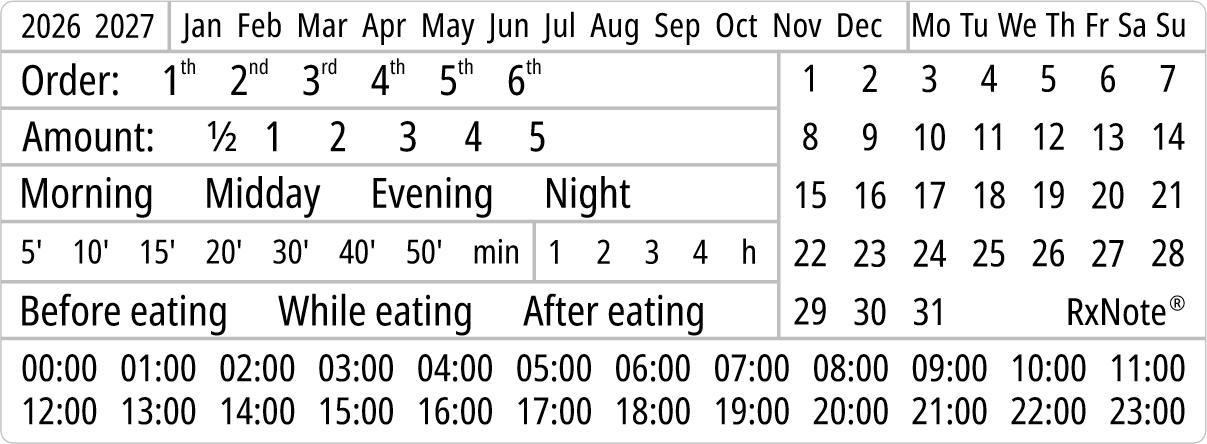
With these notes, the pharmacist indicates the following:
- the date the instructions were given
- the priority of taking the medication relative to other medications in the treatment regimen
- the times of day and/or specific hours when the medication should be taken
- how the medicine should be taken in relation to food
- the duration of medication intake
By using the RxNote Pharmaceutical Calendar, the pharmacist benefits from the simplification and speed of providing instructions.
Instead of writing out instructions one by one with a pen, which is time-consuming and often illegible for the user, they can easily and quickly highlight them with a marker!
Patient
The RxNote Pharmaceutical Calendar is particularly important for chronic medication regimens, as its daily use helps patients maintain control over the medications they have taken and those they need to take.
Furthermore, the daily perception of calendar data – the year, month, day of the week, and day of the month – indirectly contributes to mental exercise, memorization, and the patient’s orientation in time.
Product for Users and Pharmacies
Concept of Creation
Typically, a medication regimen includes more than one medicine and may be accompanied by vitamins, dietary supplements, and more. This creates the need to organize the medication regimen, for which you must remember:
- which medicine to take first, which second, and which third
- how many pills to take
- when to take them – in the morning, in the afternoon, or in the evening
- before meals, with meals, or after meals
- and most importantly, what happens when you don’t remember if you took the medicine?
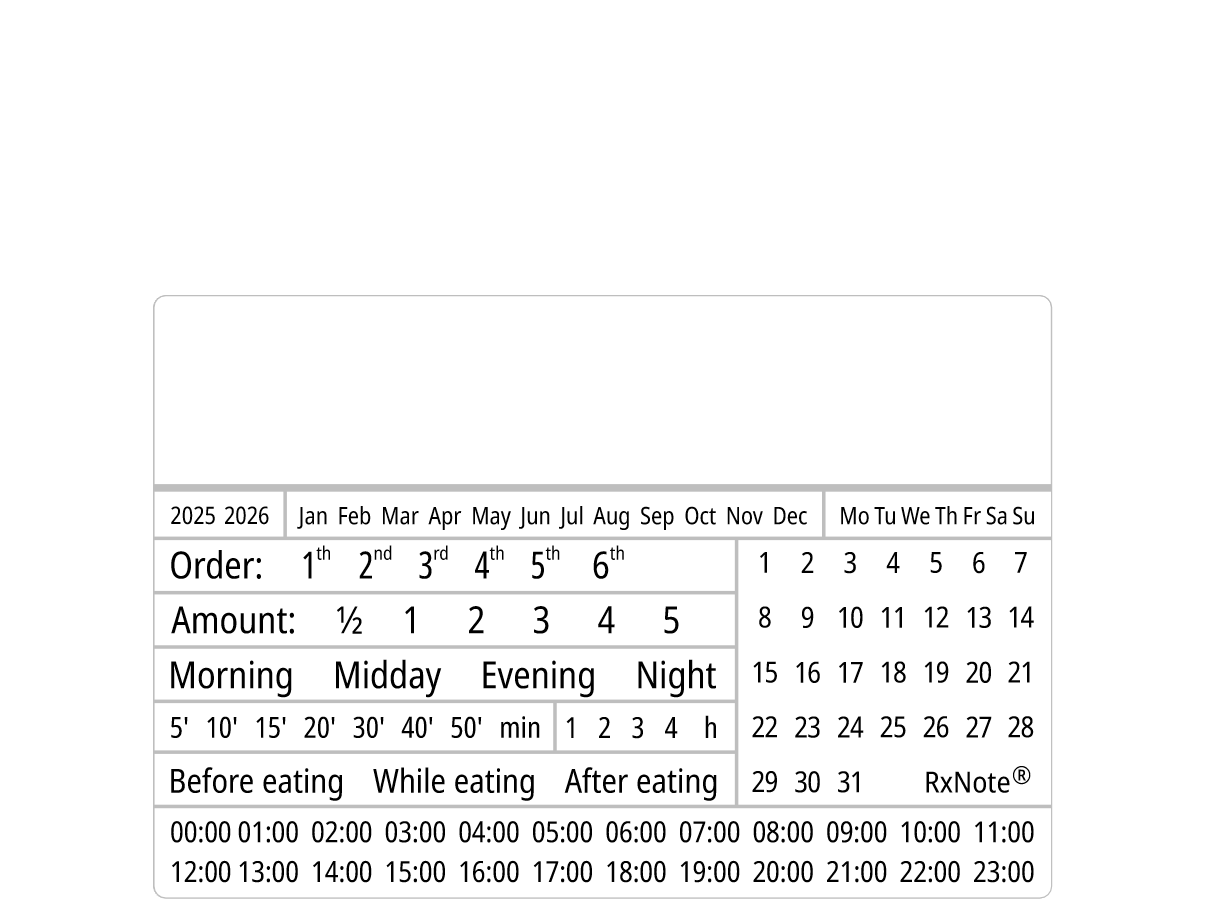
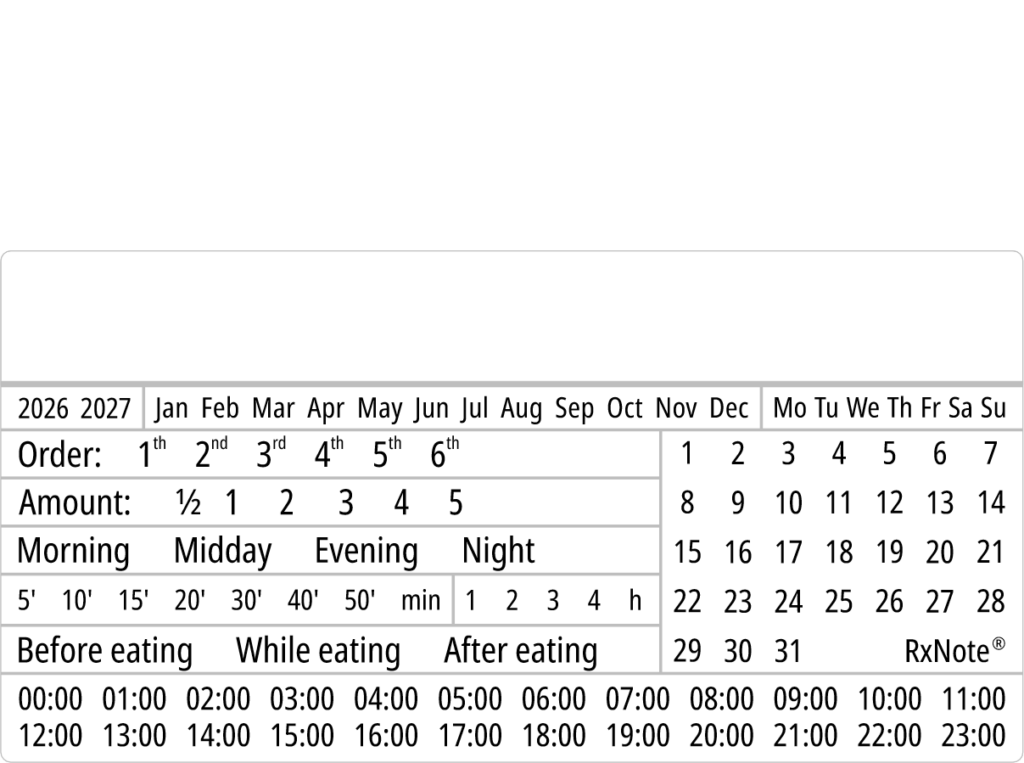
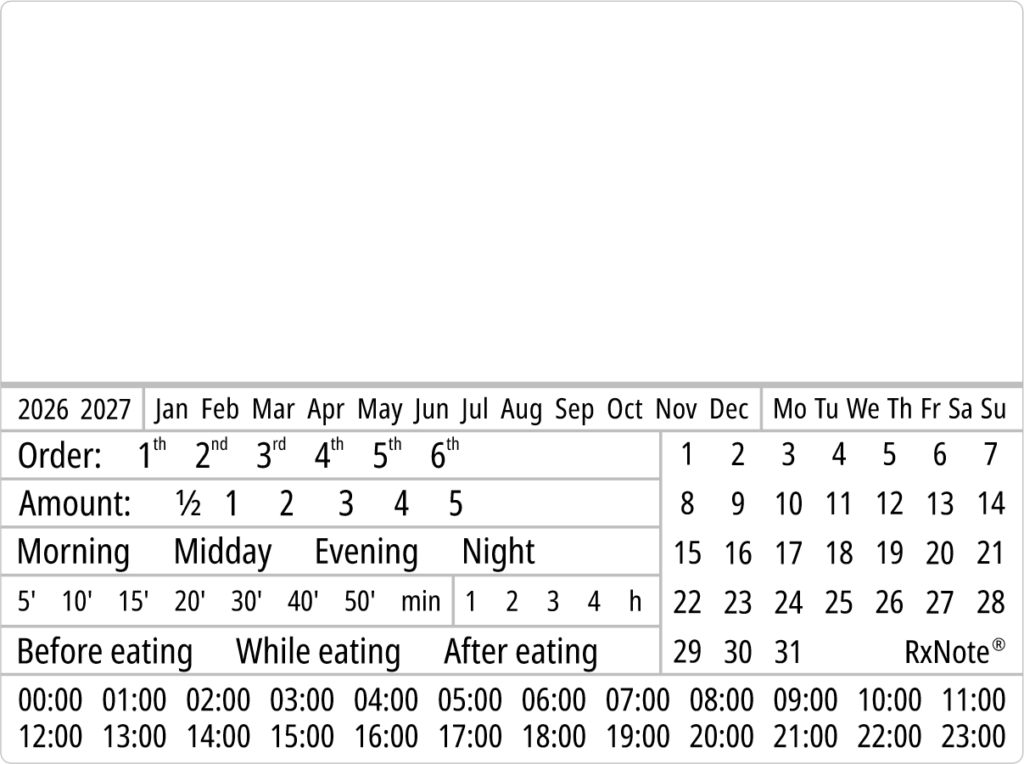
The RxNote Pharmaceutical Calendar is an innovative and simple way to guide and ensure adherence to medication, which will help you bring order and organization to your treatment.
The advantage of the RxNote Pharmaceutical Calendar is that it combines three actions – those of the physician, the pharmacist, and the patient.
The pharmacist notes the instructions for taking medication in the RxNote Pharmaceutical Calendar. With these notes, the pharmacist indicates:
- the date the instructions were given
- the priority of taking a medicine in relation to other medicines in the regimen
- the times of day or specific hours when the medicine should be taken
- how the medicine should be taken in relation to food
- the duration of medicine intake
After receiving the pharmacist’s instructions, the patient has control over their medication regimen, because each time they note:
- the day the medicine was taken
- the year
- the month
- the day of the week
The RxNote Pharmaceutical Calendar is particularly important in cases of chronic medication, as its daily use helps the patient to be aware of the medications they have taken and those they need to take.
Furthermore, the daily awareness of calendar data – the year, month, day of the week, and day of the month – indirectly contributes to mental exercise, memorization, and the patient’s orientation in time.
When the patient makes notes in the RxNote Pharmaceutical Calendar, the immediate result is that they know whether or not they have taken their medication. This is the main advantage of this innovation.
Ask your pharmacist for the RxNote Pharmaceutical Calendar or order it here.